Most people think of dark chocolate as a health food, and in many ways, it is. High-quality dark chocolate is rich in antioxidants and beneficial plant compounds called polyphenols, and research has linked it to a variety of potential health benefits.
Unfortunately, cocoa beans are also one of the foods that can be vulnerable to mycotoxin contamination.
Cacao trees grow in warm, humid tropical climates where fungi naturally thrive. After harvest, the beans are fermented, dried, shipped, stored, roasted, and processed before becoming the chocolate we know and love. Every one of those steps creates opportunities for mold growth and mycotoxin contamination if the beans aren’t handled carefully.
Research has found that ochratoxin A is the mycotoxin most commonly associated with cocoa, while aflatoxins have also been detected. One Brazilian study found detectable ochratoxin A in 98% of chocolate samples tested. Among those same samples, aflatoxins were also detected 80% of the time. Researchers are increasingly interested in these co-occurring mycotoxins because multiple toxins may magnify each other’s effects.
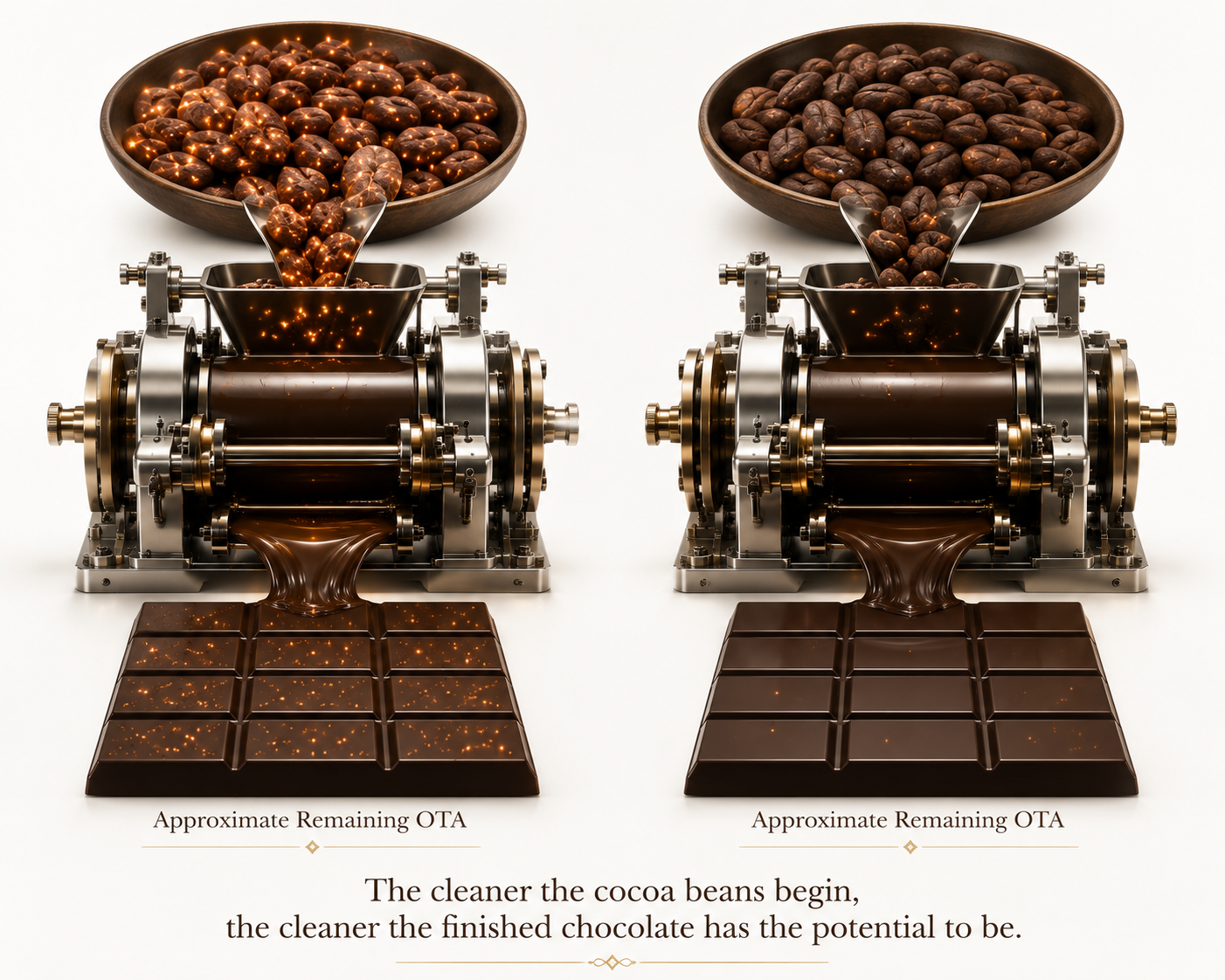
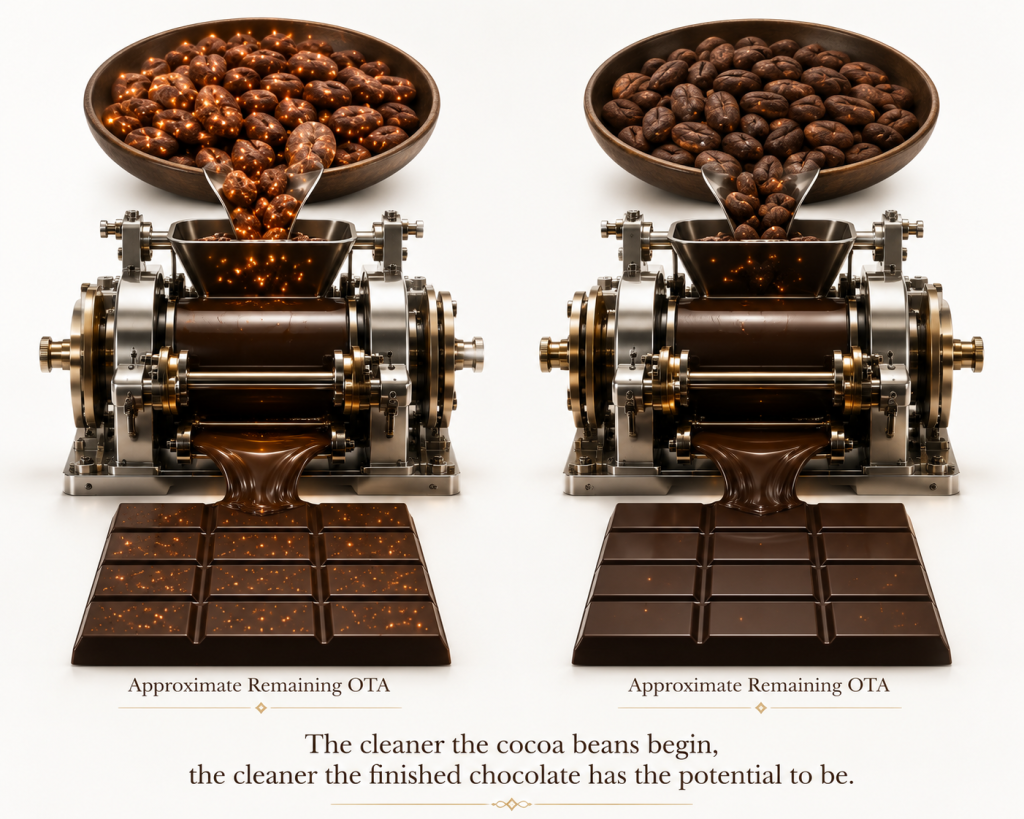
A separate study found that the chocolate-making process reduced ochratoxin A by about 94%. That’s great news, but that remaining 6% is where mold-conscious minds start asking questions. This is where we see how much sourcing really matters.
Think about it: if two manufacturers each reduce ochratoxin A by about 94%, but one starts with highly contaminated cocoa beans while the other starts with relatively clean beans, the finished products can still be very different. In other words, the quality of the raw cocoa is just as important as the quality of the manufacturing process itself.
Many people understandably assume that a premium dark chocolate bar is automatically a healthier choice. While dark chocolate does contain more beneficial cocoa polyphenols and less sugar, questionable dairy and other additives than most milk chocolate, the same cocoa solids responsible for many of those health benefits are also where mycotoxins—and even certain heavy metals—tend to become concentrated when contamination occurs. That doesn’t mean you should avoid dark chocolate. It simply means the quality of the cocoa itself matters even more.
For most people, enjoying chocolate from time to time is unlikely to be a major source of concern. But at Jernigan Nutraceuticals, we work with individuals whose bodies are often already carrying a significant toxic burden. Many have cleaned up their diet, switched to organic foods, and are doing “all the right things,” yet they still wonder why their symptoms continue to flare.
Sometimes it’s not the obvious sources that matter most. It may be the collection of small, everyday exposures that quietly add up over time. That’s why we want to shine a light on some of the foods that can be unexpected sources of mycotoxins — not because we believe you should fear them, but because we believe knowledge empowers better choices. Choosing cleaner versions of the foods you already enjoy is one practical way to reduce your overall toxin burden without giving up everything you love.
Practical Shopping Tips
- Choose dark chocolate (generally 85% cocoa or higher) for its higher cocoa-polyphenol content and lower sugar, etc. content.
- Whenever possible, purchase from companies that discuss careful sourcing, contaminant testing, or rigorous quality-control practices.
- European-manufactured chocolate may provide an additional layer of confidence because Europe generally maintains stricter contaminant regulations than the United States, although no country or manufacturer can guarantee a completely contaminant-free product.
- Store chocolate in a cool, dry place away from heat and moisture.
At Jernigan Nutraceuticals, we don’t believe health is about perfection. You’re never going to eliminate every environmental toxin you encounter. Instead, we focus on reducing unnecessary exposures whenever practical. Chocolate can absolutely remain part of a healthy lifestyle. We simply believe it’s worth choosing the cleanest, highest-quality chocolate you can find—especially if you’re intentionally working to reduce your body’s overall toxin burden.
References
- [1] Copetti MV, Iamanaka BT, Pereira JL, Lemes DP, Nakano F, Taniwaki MH. Co-occurrence of ochratoxin A and aflatoxins in chocolate marketed in Brazil. Food Control. 2012;26(1):36-41.
- [2] Copetti MV, Iamanaka BT, Pitt JI, Taniwaki MH. Fungi and mycotoxins in cocoa: From farm to chocolate. International Journal of Food Microbiology. 2011;147(2):159-166.
- [3] Copetti MV, Iamanaka BT, Pereira JL, Frisvad JC, Pitt JI, Taniwaki MH. The effect of cocoa processing on ochratoxin A content. Food Research International. 2013;52(1):68-74.
- [4] Mounjouenpou P, Gueule D, Fontana-Tachon A, Guyot B, Tondje PR, Guiraud JP. Filamentous fungi producing mycotoxins in cocoa: A review of current knowledge. Comprehensive Reviews in Food Science and Food Safety. 2021;20(3):2267-2291.
- [5] Asprey D. The Bulletproof Diet. Rodale Books; 2014. (Chapter 11: Chocolate.)
Related Posts
Mold & High-Risk Foods: Spices
Spices may be one of the most overlooked sources of dietary mycotoxin exposure. Many spices are grown in warm, humid climates, then...

Mold & High-Risk Foods: Coffee
Coffee has become one of the most discussed foods in conversations about mold exposure, and for good reason. From harvest to your...
Mold & High-Risk Foods: Nuts
Mold exposure and its role in chronic illness — including its ties to Lyme disease and related conditions — often comes down...
Mold Mycotoxins: Types, Sources, & Health Effects
In our past few posts, we have explored the dangers of toxic mold exposure, its relation to Lyme disease and related chronic...

Different Types of Mycotoxins & Their Health Risks
In our past few posts, we have discussed the impact that mold can have on the body, its relation to chronic Lyme...

Top Sources of Mold Exposure and How Toxicity Happens
Mold toxicity is a hidden epidemic. Find out why it’s more common than most realize, what fuels its growth, and the surprising...