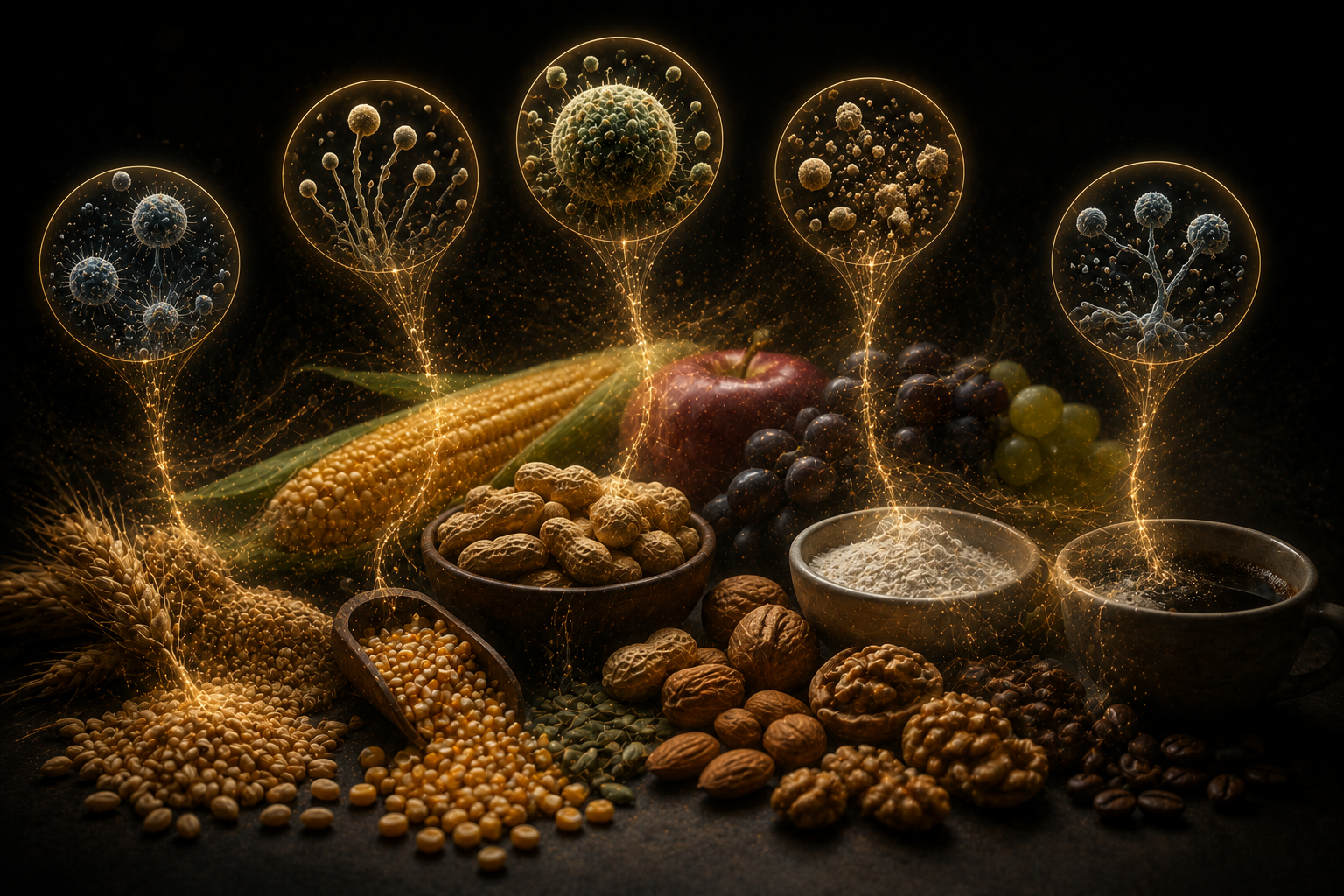
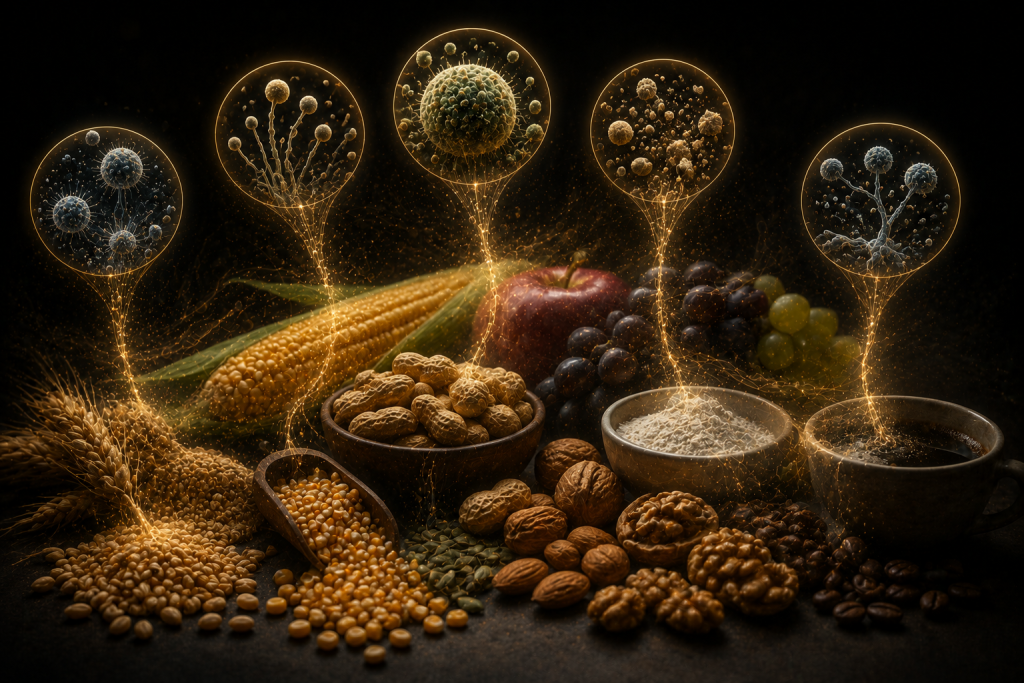
Mold exposure and its role in chronic illness — including its ties to Lyme disease and related conditions — often comes down to trace contamination in everyday foods. Many of the foods most likely to carry mold mycotoxins are, ironically, foods commonly considered “health foods.” That’s exactly why this matters: trace contamination could be one reason you feel like you’re eating clean, but your body still isn’t responding well.
Dave Asprey gives us a great starting foundation in his article “Why Mycotoxins Are Kryptonite (And How to Hack Them)“:
“We’ve created a whole new level of aggressive mold because of what we’ve done to our soil. The weed killers RoundUp and glyphosate dramatically increase the amount of toxins soil fungi put out, as does the new standard of using antifungal paint in construction. Only the strongest molds survive pesticide spray and antifungal treatment. Those that do survive release more toxins in response to their hostile environment. Foods in the US meet federal mold and mycotoxin standards, but that’s because the US has by far the worst mycotoxin regulation in the developed world [2]. And between soil-destroying pesticides and abhorrent factory farming practices (including intentionally feeding animals moldy feed right before slaughter, disrupting their hormones so they gain more weight), the US also has the most severe mycotoxin problem of any country. Proof is in the map… published [in his article] by agricultural nutrition company Biomin.”

Foods Most Commonly Associated with Trace Mold (Mycotoxin) Contamination
Nuts
Nuts present a unique challenge when it comes to mold control because they often spend months moving through harvesting, drying, processing, storage, and transportation before reaching consumers. Along the way, exposure to moisture, humidity, and improper storage conditions can create opportunities for mold growth and mycotoxin contamination.
Research suggests that pistachios, peanuts (technically legumes), hazelnuts, and walnuts are among the nuts most consistently associated with aflatoxin contamination, while Brazil nuts can occasionally contain very high levels when contamination occurs. Almonds and cashews are generally reported less frequently, although contamination has been documented in both.
While no food can be guaranteed mold-free, these practical steps may help reduce your overall exposure:
- Choose nuts that have been stored and sold refrigerated whenever possible.
- Look for companies that discuss aflatoxin testing, quality control, or freshness standards.
- Avoid dusty or open bulk bins that may have been exposed to air and humidity for extended periods.
- Favor suppliers with high product turnover and a reputation for freshness.
- Store nuts in the refrigerator or freezer as soon as you bring them home.
- If a product smells musty, stale, or “off,” trust your senses and discard it.
Brands That May Be Safer Sources of Nut Butter (not affiliate links):
- Once Again
- MaraNatha
- Big Spoon Roasters
There are mixed opinions on nuts within the health community, and no research study can evaluate every brand or every batch. The purpose of this information is not to create fear around food, but to ensure that you are aware of potential sources of mycotoxins and to empower you to use your best judgement and do what feels best to your unique body.
References
- [1] Wild CP, Gong YY. Mycotoxins and Human Disease: A Largely Ignored Global Health Issue. Carcinogenesis. 2010;31(1):71–82.
- [2] Marin S, Ramos AJ, Cano-Sancho G, Sanchis V. Mycotoxins: Occurrence, Toxicology, and Exposure Assessment. Food and Chemical Toxicology. 2013;60:218–237.
- [3] Eskola M, Kos G, Elliott CT, Hajšlová J, Mayar S, Krska R. Worldwide Contamination of Food-Crops with Mycotoxins: Validity of the Widely Cited “FAO Estimate” of 25%. Critical Reviews in Food Science and Nutrition. 2020;60(16):2773–2789.
- [4] Jallow A, Xie H, Tang X, Qi Z, Li P. Worldwide Aflatoxin Contamination of Agricultural Products and Foods: From Occurrence to Control. Comprehensive Reviews in Food Science and Food Safety. 2021;20(3):2332–2381.
- [5] Ebrahimi M, Kazemi S, Mohammadi P, et al. Aflatoxin B1 in Peanuts and Tree Nuts: A Global Systematic Review and Meta-Analysis. AIMS Agriculture and Food. 2022;7(2):342–360.
- [6] Asprey D. Why Mycotoxins Are Kryptonite (And How to Hack Them). DaveAsprey.com.
Related Posts
Mold & High-Risk Foods: Chocolate
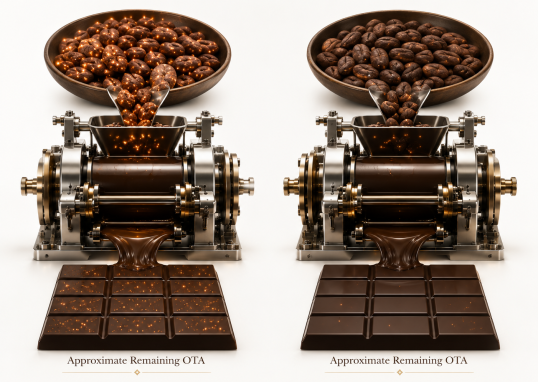
Most people think of dark chocolate as a health food, and in many ways, it is. High-quality dark chocolate is rich in...
Mold & High-Risk Foods: Spices
Spices may be one of the most overlooked sources of dietary mycotoxin exposure. Many spices are grown in warm, humid climates, then...

Mold & High-Risk Foods: Coffee
Coffee has become one of the most discussed foods in conversations about mold exposure, and for good reason. From harvest to your...
Mold Mycotoxins: Types, Sources, & Health Effects
In our past few posts, we have explored the dangers of toxic mold exposure, its relation to Lyme disease and related chronic...

Different Types of Mycotoxins & Their Health Risks
In our past few posts, we have discussed the impact that mold can have on the body, its relation to chronic Lyme...

Top Sources of Mold Exposure and How Toxicity Happens
Mold toxicity is a hidden epidemic. Find out why it’s more common than most realize, what fuels its growth, and the surprising...